
Trenchers Explained: Types, Digging Chains and How to Choose
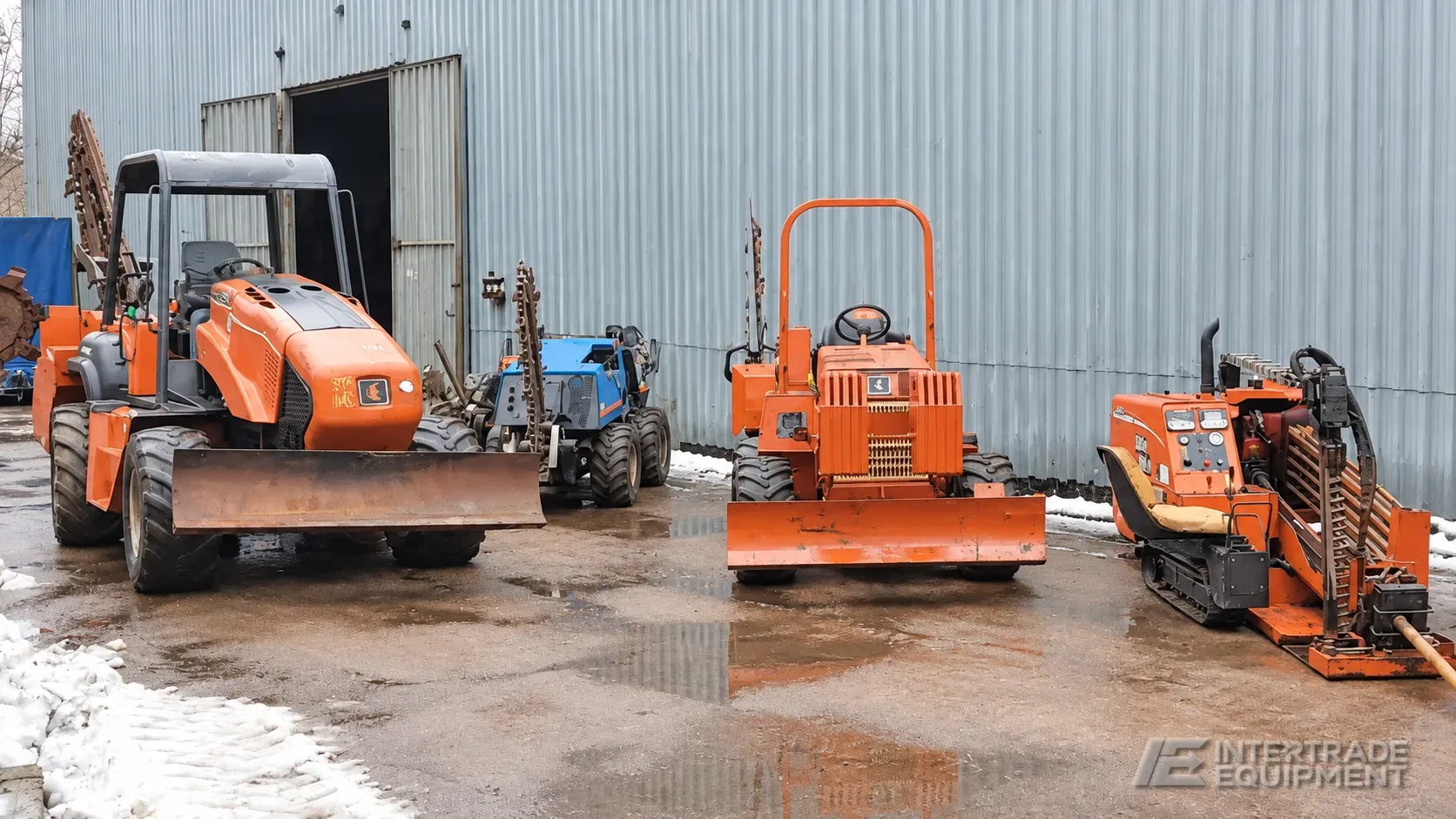
A trencher can make an irrigation installation straightforward—or turn a short utility run into a slow, expensive job. The difference often comes down to what is below the surface and how well the digging system matches it.
Choosing trenching equipment involves more than finding enough horsepower or a boom long enough to reach the desired depth. Machine size, access, chain configuration, soil removal and the condition of the wear parts all affect the finished trench. A compact machine with the right chain may be a better fit than a larger unit equipped for a different type of ground.
This guide explains the main types of trenchers, the differences between cup teeth and carbide cutting teeth, how to approach sand, clay, rocky soil and frozen ground, and what to inspect before buying a used trencher.
What Is a Trencher, and What Is It Used For?
A trencher is an excavation machine designed to cut an elongated channel in the ground. A chain trencher uses a continuous digging chain traveling around a boom. Its teeth loosen material, while the digging system lifts spoil out of the cut. Many machines use an auger to move that material away from the trench edge.
Common applications include sprinkler and irrigation lines, electrical conduit, water service connections, communications cable, drainage installations and other underground utilities. Larger trenchers serve pipeline and major infrastructure projects. The appropriate equipment depends on the installation design and ground conditions; the word “trencher” covers machines with very different capabilities.
An irrigation trencher and a utility trencher may share the same basic design. Their working dimensions and tooling determine whether they suit the job. A drainage trench, for example, may require more width for pipe, bedding and aggregate than a narrow conduit installation.
What Types of Trenchers Are Available?
Trenchers can be classified by their carrier, their cutting mechanism or their application. These categories overlap: a tracked ride-on machine may use a chain attachment, while another utility tractor may carry a rockwheel or microtrencher.
Walk-Behind and Walk-Beside Trenchers
A walk-behind trencher is a compact, dedicated trench digging machine operated from ground level. It is worth considering for residential irrigation, landscaping and small utility projects where access and transport matter. Some compact utility machines use walk-beside controls instead, allowing the operator to work alongside the carrier.
When comparing a small trencher, check its actual width, working weight, steering arrangement and digging configuration. A machine that fits through a gate still needs enough space to position the boom and manage spoil. Compact dimensions also do not establish rock-cutting ability: chain selection and the machine’s approved operating limits remain decisive.
Ride-On Trenchers and Utility Tractors
A ride-on trencher provides a seated operating position and is a candidate for repeated utility installation work. Depending on the model, the carrier may accept a trencher, vibratory plow, backhoe, rockwheel or backfill blade. Check which attachments are actually installed and supported; photographs of a model with several attachments do not establish what a particular used machine includes.
For contractors comparing a walk-behind trencher versus a ride-on trencher, the useful question is how the complete machine fits the workload. Consider access, digging dimensions, ground conditions, attachment needs and transport alongside horsepower.
Tracked Trenchers Versus Wheeled Trenchers
Tracks and wheels describe the undercarriage rather than the digging method. Compare traction, stability, surface conditions, turning space and maintenance needs for the specific carrier. A tracked trencher may suit difficult footing, but tracks do not eliminate the risk of getting stuck or damaging finished surfaces. Rubber tracks can still mark turf during tight turns.
For a used tracked machine, include rollers, idlers, sprockets and track condition in the purchase budget. For a wheeled trencher, inspect tires, hubs and steering components. The better choice depends on the worksite and the condition of the machine offered.
Skid Steer and Mini Skid Steer Trencher Attachments
A trencher attachment can turn an existing loader into a trenching machine. This is useful when the same carrier must also move material or perform other tasks. Some attachments offer side shift for positioning the cut closer to a fence or structure. Available digging depths and widths vary by attachment.
Before buying a skid steer trencher attachment or mini skid steer trencher, verify the mounting interface, carrier approval, attachment weight, hydraulic flow, operating pressure, couplers and control requirements. Confirm any return-line or case-drain requirements specified by the manufacturer. A mounting plate that fits is only one part of compatibility.
Large Chain and Pipeline Trenchers
Large chain trenchers address a different scale of work from compact landscaping machines. Selection involves the required cut, geology, material handling and project production targets. Rock-cutting tooling must be chosen for the formation, rather than assuming one carbide tooth fits every application.
For hard-rock tooling, Vermeer distinguishes plug-style tips for harder rock and impact, cap-style tips for softer abrasive rock, and narrow-bottom designs combining features of both. These are tooling considerations for appropriate machines, not upgrades that give a residential trencher the capability of a pipeline machine.
Rockwheel and Wheel Trenchers
A rockwheel uses a rotating cutting wheel rather than an endless digging chain. Suitable machines and tooling can cut rock and paved materials. A bucket-wheel trencher is different: it uses buckets around a wheel to excavate and carry material, with configurations intended for productive soil removal. “Wheel trencher” therefore does not always mean “rock saw.”
Microtrenchers
A microtrencher cuts a narrow slot, commonly for communications infrastructure in or alongside paved surfaces. It should be considered as part of an installation system that includes spoil collection, cable placement and approved reinstatement.
As one model-specific example, Ditch Witch lists the MT26 with cutting widths from 1.5 to 3 inches and a maximum depth of 26 inches. That does not establish an allowable burial depth for every project. Installation requirements and approval govern whether a particular microtrenching method is acceptable.
Trencher vs. Excavator vs. Vibratory Plow
A machine comparison should begin with the finished installation. Is an open trench necessary? Must the contractor expose connections, place bedding, maintain a drainage grade or remove large obstacles? These requirements can matter more than the length of the run.
Equipment | When to consider it | Questions to resolve |
|---|---|---|
Chain trencher | Continuous narrow cuts along an accessible route | Can it achieve the required dimensions and remove the expected material? |
Excavator or backhoe | Connections, wider excavation, variable shapes and obstacle removal | How much material must be handled, and is there room for the machine? |
Vibratory plow | Installing compatible cable or pipe with limited surface opening | Does the soil, product and installation specification permit plowing? |
Rockwheel | Approved cuts through difficult formations or pavement | Are the carrier, cutting tools and material-handling arrangement suitable? |
Microtrencher | Approved narrow-slot utility installations | Are depth, alignment, restoration and permitting requirements satisfied? |
A vibratory plow draws a blade through the ground and can install the utility as it travels, with limited surface disturbance. It does not create the same accessible open channel as a chain trencher. Vermeer offers both plow and trencher attachments, including combination equipment, because these installation methods serve different needs.
Use the table as a planning comparison rather than a production guarantee. A route that looks ideal for continuous trenching may still require another machine at crossings, connections or isolated obstructions.
Trencher Chain Types: Understand the Teeth First
A digging chain is both a cutting system and a material-removal system. Breaking the ground is only half the job: the loosened material must leave the trench. This is why the most aggressive-looking chain is not automatically the most productive choice.
Cup Tooth Chains: Scooping Soil Out of the Cut
Cup teeth have a scoop-shaped profile. They are a standard soil-digging option, particularly where the task is to cut and lift material rather than fracture substantial rock. They appear in dirt-chain configurations and in combination chains with other tooth styles. Ditch Witch identifies cup teeth as its standard utility tooth and distinguishes them from Shark and rotating Alligator tooling.
Shark-Style Carbide Teeth: Cutting Tougher Ground
Shark-style teeth use a pointed cutting profile with carbide at the working end. Ditch Witch recommends its Shark tooth for medium, hard and rocky soils, as well as frost conditions. Inspect the carbide and the supporting steel: a tooth can lose useful support below the tip before the entire tooth disappears. Shark is a manufacturer-associated name; replacement tooling must match the actual digging system.
Rotating Carbide Picks, Bullet Teeth and Alligator Teeth
Some rock-oriented chains use rotating carbide picks. Ditch Witch’s Alligator tooth is a rotating design for hard and rocky ground. Its ability to rotate helps distribute wear; a seized pick can develop uneven wear. Other suppliers use descriptions such as bullet teeth. These names describe product families and shapes, not a universal interchangeability standard.
Combination Chains: Cutting and Cleaning Together
A combination trencher chain mixes tooth types to handle changing conditions. For example, carbide cutters can address harder material while cup teeth help carry loosened soil out of the cut. Manufacturers offer different patterns and proportions, so “combo chain” is a starting description rather than a complete specification.
Premier lists standard cup, bullet, Shark and Scorpion configurations with different ground-condition recommendations. Select from the chart for the actual attachment and chain offered. Do not assume that a ratio advertised by one supplier describes another manufacturer’s product.
Which Trencher Chain Should You Use for Different Soils?
The following chart is a selection starting point. Ground moisture, stone size, abrasiveness, tooth spacing and machine capacity can change the answer. Final selection should follow the manufacturer’s recommendations for the exact digging system.
Ground condition | Chain configuration to evaluate | Main consideration |
|---|---|---|
Sand, loam and ordinary soft soil | Soil chain with cup teeth | Effective soil removal and wear in abrasive material |
Moist, sticky clay | Manufacturer-recommended soil chain; appropriate open spacing where offered | Material release and packing between teeth |
Dry clay and compacted soil | Combination chain; harder-ground cutters where approved | Penetration as well as removal |
Mixed soil with small, fracturable stones | Approved combination chain | Actual stone content, size and hardness |
Rocky ground or gravel | Rock-oriented chain appropriate to the machine | Loose moving stones and large obstructions can remain difficult |
Light frost | Approved combination chain | Frost severity and capacity of the carrier |
Hard, deep frost | Approved dedicated frost/hard-ground tooling | Specialist configuration and increased wear |
Continuous bedrock | Engineered rock-trenching solution | Geology and complete machine capability |
Best Trencher Chain for Clay: First Ask Whether It Is Wet or Dry
“Clay” alone is not a sufficient chain specification. Toro’s operator guidance recommends a soil chain for wet, sticky clay and a combination chain for dry clay and compacted ground. The practical distinction is whether the digging system is struggling mainly to penetrate the material or to release it.
When discussing a clay job with a supplier, describe the moisture and digging behavior. “The teeth pack solid after a few feet” is more useful than “the soil is hard.” Photographs, samples and local experience can help narrow the options.
Best Trencher Chain for Sand: Consider Wear as Well as Speed
Sand may not require aggressive rock tooling, but it can be abrasive. Vermeer cautions that carbide rotary teeth intended for harder conditions can experience premature wear in sandy or abrasive soil. Choosing a rock chain simply because it appears stronger can therefore be a poor match.
Trenching in Rocky Soil: Stones Are Not the Same as Bedrock
Before selecting a rock chain, establish what “rocky” means at the site. Soil with occasional breakable stones, loose cobbles and continuous rock present different problems. A machine that can fracture one material may struggle with another even when both are described as rock.
For engineered rock trenching, tooth design, cutting pattern and the condition of the remaining teeth affect the working system. Vermeer’s pipeline guidance discusses coordinated digging patterns and warns that teeth worn beyond service life increase strain on the others. A carbide tip should not be treated as permission to force an unsuitable machine through an obstruction.
Trenching in Frozen Ground
Frost severity changes tooling requirements. Ditch Witch identifies combination chains for softer frost and Alligator or weld-on Shark chains for hard, deep frost on suitable equipment. Its winter guidance also calls for more frequent tooth checks because wear may accelerate. Confirm the approved configuration rather than applying a winter recommendation from a larger machine to a compact rental trencher.
Chain Pitch, Tooth Spacing and Cutting Width
When ordering replacement trencher chain, distinguish physical chain dimensions from tooth-pattern terminology. The base chain must fit its drive system. Tooth placement describes how cutters are arranged along that chain.
Ditch Witch describes two-pitch patterns as having more cutting teeth and four-pitch patterns as providing more space between teeth. Its guidance associates denser patterns with dry and rocky conditions and wider spacing with wet, muddy material. These are pattern recommendations within its systems; they should not be read as universal inch dimensions for every chain.
Give the supplier the machine model and serial number, attachment model, boom specification, existing chain identification and desired cutting width. Confirm chain series, physical pitch, length or link count, tooth pattern and sprocket compatibility against the parts information. A label such as “48-inch trencher chain” does not, by itself, define a complete replacement assembly.
For width selection, start with the installation design. Pipe or conduit diameter is only one input: bedding, spacing, connections and inspection access may require additional room. Specify the required finished trench rather than buying the narrowest available chain and trying to adapt the installation afterward.
How to Choose the Right Trencher for Your Work
- Define the finished trench. Record required depth, width, route length, grade needs and any access for connections.
- Describe the ground. Separate moist clay, dry hardpan, abrasive sand, mixed fill and rock rather than using one general label.
- Measure access. Include gates, turning space, overhead obstacles, slopes and room for spoil.
- Identify the complete configuration. Verify boom, chain, crumber, auger and carrier together.
- Plan support equipment. Consider transport, backfill, compaction, material removal and work at crossings.
- Budget for actual condition. Include immediate wear parts, servicing and downtime rather than comparing purchase prices alone.
These questions also make a rental inquiry more productive. Instead of asking for “a trencher for water lines,” give the supplier the installation dimensions, ground description and access constraints. Avoid selecting a machine solely because its advertised maximum depth matches the required cover. Verify what that rating represents for the installed configuration.
What Affects Trencher Productivity?
There is no reliable universal answer to “How many feet can a trencher dig per hour?” A useful estimate must state the machine, chain, dimensions, ground and site conditions. Separate active cutting time from repositioning, utility exposure, cleanup and restoration.
When a machine underperforms, look at the complete digging process. Is it penetrating poorly? Is loosened material falling back into the trench? Is the chain loaded with sticky soil? Are teeth missing or worn? Toro’s operating guidance notes that excessive travel speed can stall trenching and that a crumber can improve trench-bottom cleanup. Follow the machine’s own procedures for operation and recovery from a stall.
A short, authorized test cut in representative ground is more informative than a seller’s production claim from an unrelated job. Record conditions so the result can support a realistic estimate.
Buying a Used Trencher: What to Inspect
A used trencher should be evaluated as a complete working machine. Engine sound, paint condition and an hour-meter reading do not show how much useful life remains in the digging system. Treat the following as a buyer’s inspection framework; the operator and service manuals govern detailed checks.
Confirm Identity and Included Equipment
Match the model and serial number to the machine records. Identify the installed digging attachment separately where applicable. Record the boom, cutting width, tooth configuration and included accessories. Ask for service history and clarify whether the hour meter is original or has been replaced.
Inspect Chain, Teeth, Boom and Sprockets
Look for missing cutters, fractured carbide, damaged holders, loose hardware, cracks and uneven wear. Check the boom’s wear surfaces and the condition of its nose assembly. Have chain wear and adjustment range assessed against the applicable service limits.
Inspect the sprockets along with the chain rather than pricing them independently. Ditch Witch emphasizes that chain, teeth and sprockets operate as an interdependent system; wear in one component affects the others. Budget around the actual findings, not a promise that replacing a few teeth will resolve every problem.
Check the Carrier and Hydraulics
Arrange a cold start where practical, then evaluate the machine after warming up. Have a qualified inspector check leaks, controls, steering, propulsion, braking and attachment operation. Request a safe working demonstration in suitable, cleared ground when available. A chain spinning in the air demonstrates movement but does not establish performance under digging load.
Assess Transport and Future Support
Confirm the actual transport weight and dimensions with installed attachments. Check access to manuals and replacement chains, teeth, seals and other service parts. An inexpensive machine can become a costly purchase if the necessary repairs or components are difficult to obtain.
Trencher Maintenance: Protect the Digging System
Set chain tension by the operator’s manual, including its specified machine position and measurement method. There is no single correct sag measurement for all trenchers. A setting borrowed from another machine can be inappropriate.
Routine checks should include damaged teeth, retaining hardware, sprockets, boom wear, hydraulic leaks and the carrier’s running gear. Ditch Witch notes that incorrect tension and worn tooling can affect both wear and operation. Keep tracked undercarriages clear of accumulated material and maintain track tension according to the machine’s instructions.
Before touching the digging system, stop and secure the machine, isolate energy and follow the prescribed hydraulic-pressure and maintenance procedures. Never attempt to clear a moving chain. Plan replacement wear parts before a project depends on uninterrupted operation.
Safe Trenching Begins Before the Chain Turns
Arrange underground utility locating before excavation and follow the applicable notification, response and safe-exposure procedures. In North Carolina, NC811 explains that private lines are not included in its public-utility locating process. Private irrigation, secondary electrical and other owner-installed services may require separate locating.
Keep people away from the digging system and discharged material. Where workers may enter an excavation, trench inspection and protection require separate attention. OSHA identifies cave-ins as a major hazard and addresses protective systems, access, spoil placement and changing site conditions. A machine’s ability to cut a trench does not establish that it is safe to enter.
Frequently Asked Questions About Trenchers
What is the best trencher for irrigation?
Start with required depth and width, access and soil conditions. Compare a compact dedicated trencher with an attachment for an existing compatible carrier. Where the installation permits it, also evaluate whether a vibratory plow suits the product and ground.
Can a trencher dig through clay?
Yes, with suitable equipment and tooling, but wet sticky clay and dry compacted clay should be evaluated differently. Use the manufacturer’s soil chart rather than choosing a chain from the word “clay” alone.
Can a trencher cut through rock?
Some machines and digging systems are designed for rock. Establish the type and extent of the rock first. A compact trencher with carbide teeth should not be assumed capable of cutting continuous bedrock.
Can a trencher cut tree roots?
Do not select a trencher as a general-purpose root-removal tool. Root size, entanglement and damage to retained trees require separate assessment. Stop and reassess an obstruction rather than forcing the digging system through it.
What is the difference between a dirt chain and a rock chain?
A dirt chain generally emphasizes soil cutting and removal, often with cup teeth. A rock-oriented chain uses tooling selected for harder material. Names and patterns vary by manufacturer, so compare the actual configurations.
Is a combination chain the best all-purpose trencher chain?
It is a useful option for mixed conditions, but it is not automatically best for every job. A soil chain may suit soft or sticky material better, while demanding rock work may require a specialized machine and tooling.
How deep can a walk-behind trencher dig?
That depends on the model and installed boom. Check the specified digging depth for the configuration offered, then confirm it meets the project’s required trench dimensions.
Can I use a trencher for a French drain?
Evaluate the drain design first. Pipe, aggregate envelope, fabric and grade requirements determine the necessary excavation. A narrow trenching configuration may not provide the required width.
Should I buy or rent a trencher?
Compare expected use, changing soil conditions, transport, storage, maintenance and downtime. Renting can provide access to a different configuration for an unusual job; ownership should be evaluated against the work you actually expect to repeat.
What should I ask before buying a used Ditch Witch or Vermeer trencher?
Request identification, service history, attachment details, chain and tooth information, known defects and a working demonstration where possible. Inspect the individual machine rather than relying on brand reputation or hours alone.
Find a Trencher That Fits the Ground and the Job
Begin with the installation requirements, then match the carrier and digging system to the site. For a used machine, include the condition of its chain, teeth, boom, sprockets and running gear in the decision.
INTERTRADE EQUIPMENT LLC buys and sells used equipment and helps buyers source machinery, arrange inspections and coordinate logistics in the United States. Contact us with your required digging depth, trench width, typical soil conditions, location and budget so we can discuss suitable equipment options.
Technical Sources
This guide draws on manufacturer guidance and excavation safety resources. For machine-specific chain selection, operating limits and maintenance procedures, consult the operator’s manual for your equipment.